You Don't Have to Believe in Magic to Use Tarot — Here's Why That's the Point
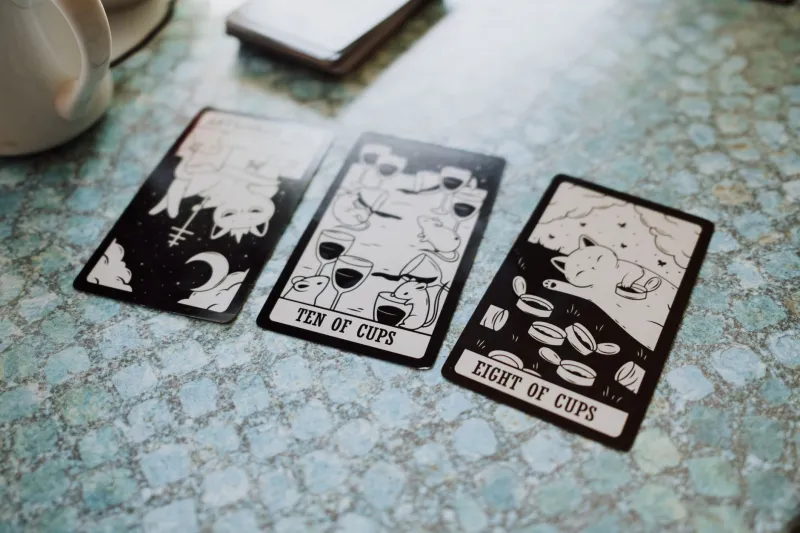
Let me say something that might get my spiritual-community card revoked: you don't need to believe in divination for tarot to be genuinely useful. Not even a little bit. In fact, I'd argue the most transformative thing tarot can do for you has absolutely nothing to do with the supernatural — and everything to do with the very mundane, very powerful act of paying attention to your own mind.
Stay with me.
The Fortune-Telling Myth Is Doing Tarot Dirty
The pop-culture image of tarot — candlelit room, dramatic music, a stranger telling you that danger lurks in your near future — has effectively kept an incredibly useful tool out of reach for a huge swath of people who could genuinely benefit from it. Skeptics roll their eyes. Rationalists dismiss it. And honestly? Fair enough, if that's what they think it is.
But that image is about as accurate as judging therapy by its depiction in a 1990s rom-com. The cards themselves aren't magic. They're paper. What's interesting — and what the wellness world has been slow to communicate clearly — is that the process of engaging with them can be.
Not magic in the woo sense. Magic in the way that any practice that gets you to slow down, reflect, and articulate what you're actually feeling is magic. That's rare. That's valuable. And tarot, it turns out, is surprisingly good at it.
What's Actually Happening When You Pull a Card
Here's the thing about a tarot deck: it gives you a random image, and then your brain immediately starts making meaning out of it. That's not mysticism — that's just how human cognition works. We are meaning-making machines, and we can't help but project our inner world onto ambiguous stimuli.
Psychologists have a name for this: projective association. It's the same principle behind Rorschach inkblot tests. When you pull the Tower card and feel a spike of anxiety, that reaction isn't the card telling you something about your future. It's you telling you something about your present. The card is just the mirror.
This is why tarot works even — maybe especially — for skeptics. You don't have to believe the universe arranged that particular card to surface for you. You just have to be willing to ask: why does this image resonate right now? What does my reaction to it reveal?
That question alone can unlock things that weeks of journaling without a prompt might not reach.
The Psychology Behind Symbolic Prompting
One of the trickier aspects of self-reflection is that we tend to circle the same familiar thoughts. Our internal monologue runs well-worn grooves. We think about our problems the way we always think about our problems, which is part of why those problems can feel so intractable.
What tarot does — and what makes it genuinely useful from a psychological standpoint — is interrupt that loop with an unexpected prompt. The imagery in a traditional Rider-Waite deck, for example, is rich with archetypes that tap into something deeper than our surface-level chatter. The Hermit. The High Priestess. The Wheel of Fortune. These aren't just pretty pictures; they're concentrated symbolic shorthand for universal human experiences.
When you encounter one of these images in the context of a question you're sitting with, you're essentially handing your subconscious a new lens. And sometimes — often, actually — what comes up when you look through that lens is exactly what you needed to see.
How to Actually Use Tarot as a Reflection Tool
If you want to try this without buying into any metaphysical framework, here's a simple approach:
Pick a question, not a yes/no. Tarot works best with open-ended prompts. Instead of "will I get the job?" try "what's underneath my anxiety about this opportunity?" The first question invites prediction. The second invites honesty.
Pull one card and sit with your gut reaction first. Before you look anything up, notice what you feel. Resistance? Curiosity? Relief? That emotional data is the point.
Then look at the card's traditional meaning — as a conversation, not a verdict. The established interpretations are useful context, but they're not law. If the conventional meaning doesn't resonate, ask yourself why. The disagreement is often where the insight lives.
Write it down. Even three sentences. Getting your response out of your head and onto a page forces a kind of clarity that mental processing alone doesn't produce.
An Opinion, Offered Directly
I think the spiritual community sometimes does tarot a disservice by over-mystifying it, and the skeptical community does it a disservice by refusing to engage at all. Both responses miss something real.
You don't have to choose between "the cards know your destiny" and "this is nonsense." There's a third option: this is a tool, and tools are worth evaluating on the basis of what they actually do.
What tarot actually does, when used thoughtfully, is create structured space for self-inquiry. It slows you down. It offers unexpected angles. It bypasses the ego's usual defenses by routing reflection through symbol and image rather than direct confrontation. For a lot of people, that's easier to engage with than a blank journal page or a therapist's open-ended "and how does that make you feel?"
If something helps you understand yourself better, it's worth taking seriously — regardless of whether you believe the cosmos had a hand in shuffling the deck.
The Invitation
You don't have to commit to a belief system to try one card pull tonight. You don't have to call yourself a tarot person or tell anyone you did it. You just have to be willing to sit with an image and ask: what is my reaction here, and what does that tell me?
That's it. That's the whole practice. The rest is just window dressing — beautiful, evocative, historically rich window dressing, but window dressing nonetheless.
The magic, if there is any, is just you finally paying attention to yourself.