The Price of Waking Up: On Spiritual Growth and the People You Quietly Outgrow
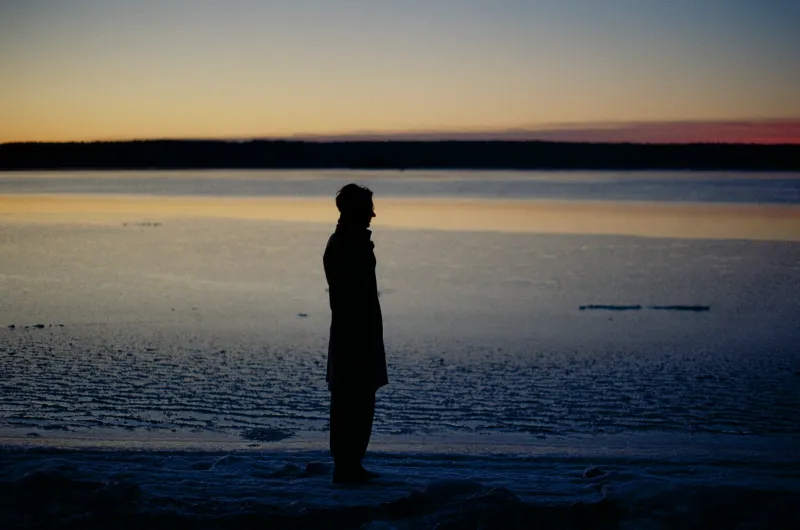
The spiritual awakening content you find online tends to focus on the good stuff. The synchronicities. The clarity. The sense of finally understanding something you couldn't quite name before. And those things are real — they're genuinely part of the experience.
What gets talked about a lot less is the loneliness.
Not the poetic, romantic kind of solitude that sounds beautiful in a journal entry. The actual, aching loneliness of sitting at Thanksgiving dinner with your family and feeling like you're visiting from another dimension. Of watching your oldest friends bond over things that used to feel important to you and realizing, with a quiet kind of grief, that you're not quite sure what feels important to you anymore — only that it's different from this.
If you've been on a conscious spiritual path for any length of time, there's a good chance you know exactly what I'm talking about.
The Paradox Nobody Puts on the Vision Board
Here's the central contradiction of spiritual growth that nobody puts on their vision board: the more aligned you become with your own truth, the more misaligned you may feel with the people and environments that shaped you.
This isn't a bug in the awakening process. It's a feature — an uncomfortable, sometimes devastating feature, but a feature nonetheless. Growth, by definition, means moving. And when you move, the distance between where you were and where you are becomes visible in ways it wasn't before.
You start noticing conversations that feel circular and draining. You find yourself less willing to numb out in the ways you used to. You develop sensitivities — to energy, to dishonesty, to the particular kind of low-grade despair that passes for normal in a lot of social settings — that the people around you don't share and may not understand.
And because you love these people, that gap can feel like loss. Because in some ways, it is.
The Third Eye Problem
In metaphysical traditions, the third eye — the ajna chakra, located between the brows — is associated with intuition, perception, and the capacity to see beyond surface-level reality. When this center begins to open, people often describe a shift in how they experience the world: things that seemed opaque become transparent, patterns become visible, and a kind of deeper seeing begins to operate alongside ordinary perception.
The problem with seeing more clearly is that you can't unsee things.
You start perceiving the dynamics in your family system that everyone has quietly agreed not to name. You feel the anxiety underneath your friend group's humor. You notice the ways certain relationships are built on a version of you that no longer quite fits — and you feel the pressure, often unspoken but palpable, to keep performing that version anyway.
The third eye, in this sense, is both gift and burden. Clarity is wonderful until it shows you something you'd rather not have to reckon with.
This Doesn't Make You Better Than Anyone
It's worth pausing here to name something important, because spiritual awakening has an ego trap built right into it: the temptation to interpret your growth as elevation above the people around you.
This is a mistake, and it's a spiritually corrosive one.
The distance you feel from certain people isn't because you've ascended and they haven't. It's because you're moving in a direction that diverges from theirs — for now, or possibly permanently. But divergence isn't hierarchy. Your cousin who has zero interest in energy work or meditation or any of this isn't spiritually behind you. They're on their own path, which may look completely different from yours and be no less valid.
The moment spiritual growth tips into spiritual superiority, it stops being growth and starts being ego in a more sophisticated disguise. Worth watching for.
Navigating the Relationships That No Longer Fit
So what do you actually do with the people you love who seem to exist in a completely different frequency than where you're currently living?
First: you don't have to blow up every relationship that feels challenging. Some connections are worth tending through the discomfort, especially long-term ones built on genuine love and history. People grow at different rates and in different directions, and someone who feels out of sync with you now might circle back around in ways you can't currently predict.
Second: find your people, even if it takes a while. The loneliness of spiritual awakening is significantly less brutal when you have even one or two people in your life who speak the same internal language. That might mean seeking out communities — in person or online — built around the practices and perspectives that matter to you. It might mean therapy with someone who doesn't pathologize your spiritual framework. It might mean being patient while new connections form.
Third: grieve what needs to be grieved. Some relationships do change irreparably as you grow, and that loss is real and worth mourning. Skipping the grief doesn't make it disappear — it just makes it heavier.
The Deeper Truth About Spiritual Isolation
The loneliness that accompanies awakening is, at its core, a sign that something real is happening. You're not performing a version of yourself anymore — and that authenticity, while ultimately liberating, creates friction with environments that were calibrated to the performance.
That friction is uncomfortable. It's also, in a strange way, evidence that you're moving toward something true.
The path gets less lonely. Not because you stop growing, but because you find your people — the ones who are also in the middle of their own strange, disorienting, beautiful becoming. And when you find them, the isolation lifts in a way that no amount of solo meditation could quite replicate.
You were never meant to wake up alone. It just sometimes takes a while for the right company to arrive.