More Is More: Why Filling Your Space with Meaning Is the Most Spiritual Thing You Can Do
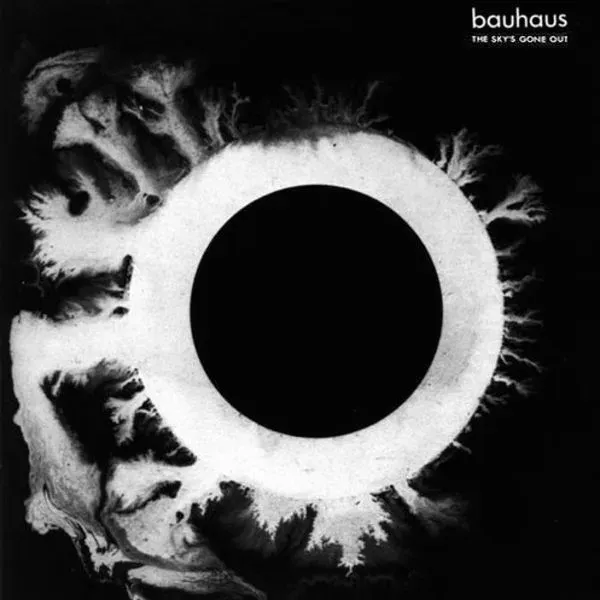
Photo: eclectic maximalist home interior colorful spiritual decor crystals tapestry, via rockyroadrecords.com.au
Somewhere along the way, we collectively decided that enlightenment looked like a Scandinavian furniture catalog. Bare walls. Neutral tones. One perfect object on a shelf, surrounded by carefully curated negative space. The message was clear: clutter is chaos, simplicity is virtue, and if your home doesn't look like a wellness brand's mood board, you haven't done the inner work.
I'd like to respectfully push back on all of that.
Not because there's anything wrong with a clean line or a quiet room. But because somewhere in our collective sprint toward minimalism, we made a mistake—we confused emptiness with peace, and accumulation with unconsciousness. And for a lot of us, that confusion has meant stripping away the very objects, colors, and symbols that make our spaces feel like ours.
The aesthetic rebellion is here. And it is gloriously, intentionally full.
The Minimalism Myth We Need to Unpack
Let's be honest about where mainstream minimalism came from. It emerged, in large part, from mid-century modernist design—a predominantly white, Western, male-dominated aesthetic tradition that equated visual simplicity with sophistication and moral clarity. When it fused with wellness culture in the 2010s, it became something more insidious: the idea that less stuff equals less ego, that a sparse home signals a spiritually evolved inhabitant.
But here's what that framework quietly erased: the rich, layered, symbol-dense visual traditions of virtually every other culture on earth.
Walk into a traditional Mexican home and you'll find altars dense with marigolds, photographs, candles, and santos. A Moroccan riad is a riot of geometric tile, hanging lanterns, and woven textiles. The homes of West African spiritual traditions are alive with color, pattern, and sacred objects. Indigenous American homes hold objects that carry generations of story and ceremony.
These aren't spaces that need to be decluttered. They're spaces that are doing something—holding memory, honoring ancestors, invoking protection, expressing identity. They are maximalist not by accident but by intention.
When we decided that the path to mindfulness ran through a neutral palette and a capsule wardrobe, we didn't just make an aesthetic choice. We quietly privileged one cultural framework over many others.
Intentional Maximalism Is Not Hoarding
Before we go further, let's make a distinction that matters enormously: intentional maximalism is not the same as accumulation for accumulation's sake. It is not clutter. It is not keeping things out of guilt or inertia.
Intentional maximalism is the practice of surrounding yourself with objects, colors, textures, and symbols that carry meaning—that tell the story of who you are, where you've been, and what you hold sacred. It is, at its core, a deeply mindful act.
The difference between a cluttered room and a maximalist one isn't the number of objects. It's the relationship you have with them.
That stack of crystals on your windowsill isn't clutter—it's a daily reminder of the practices that ground you. The gallery wall of prints, photographs, and pressed botanicals isn't visual noise—it's a living map of what you love. The layered textiles, the mismatched candleholders, the shelf of well-worn books with cracked spines—these are not signs of spiritual disorder. They are evidence of a life being lived.
What Neuroscience (and Your Ancestors) Already Knew
Here's something the minimalism conversation tends to skip: human beings are not wired for blank spaces. We evolved in richly textured natural environments, surrounded by pattern, color, and complexity. Research in environmental psychology consistently shows that spaces with visual richness—when organized around personal meaning—support creativity, emotional wellbeing, and a sense of identity.
Meanwhile, studies on awe—that sublime, expansive feeling that meditation teachers and mystics chase—suggest it's most often triggered by richness and complexity, not simplicity. The cathedral ceiling. The ancient forest. The night sky dense with stars. The market in Oaxaca or New Orleans' French Quarter, alive with color and sound and smell.
Your nervous system knows this. It's been knowing it for millennia.
Sacred spaces across cultures have always been full. Temples, shrines, ceremonial rooms—they are layered with meaning, dense with symbol, rich with sensory information that signals to the body and mind: something important happens here. The idea that spiritual space should be spare is a very recent, very particular cultural invention.
Building a Space That Holds You
So what does intentional maximalism actually look like in practice? It starts not with buying more, but with asking different questions.
Ask: Does this object have a story? A piece of vintage pottery from a road trip, a print by an artist whose work genuinely moves you, a textile that belonged to your grandmother—these carry energy. Mass-produced décor purchased because it "goes with everything" usually doesn't. You can have a full room of the former and it will feel alive. You can have a sparse room of the latter and it will feel hollow.
Ask: What do I want this space to invoke? Maximalism with intention starts with a feeling, not a Pinterest board. Do you want to feel held, inspired, protected, transported? Let that guide what you bring in and what you let go.
Ask: Am I honoring my actual cultural and spiritual lineage? This is a big one. Many of us—especially Americans navigating complex, multicultural identities—have been subtly taught that our ancestral aesthetics are "too much." Reclaiming them is not a decorating choice. It's a healing one.
Let color do its work. Color psychology is not woo—it's well-documented science. Deep jewel tones (sapphire, emerald, amethyst) create richness and depth. Warm terracottas and golds evoke groundedness and abundance. Bold, saturated color in a space signals to your nervous system that this is a place of vitality and life.
The Most Spiritual Aesthetic Is the Authentic One
At The Ethereal, we've always believed that the mystical and the mindful aren't separate from the everyday—they live in the texture of how you move through your life, the rituals you maintain, the spaces you inhabit.
Minimalism, at its best, is about intention. So is maximalism. The difference is that maximalism refuses to achieve intention through subtraction alone. It insists that meaning can be added—layered, accumulated, celebrated.
Your space is a reflection of your inner world. If your inner world is rich, complex, symbol-saturated, and full of color—why would you ask it to live in a white box?
Fill the shelves. Hang the tapestry. Put the crystals in the window where the light hits them just right. Light every candle. Bring home the object that stopped you in the vintage store because it felt like it had been waiting for you.
That's not clutter. That's a life made visible. And there's nothing more spiritual than that.